
5 Strategies for Reliable Epicor Support on a Small IT Team
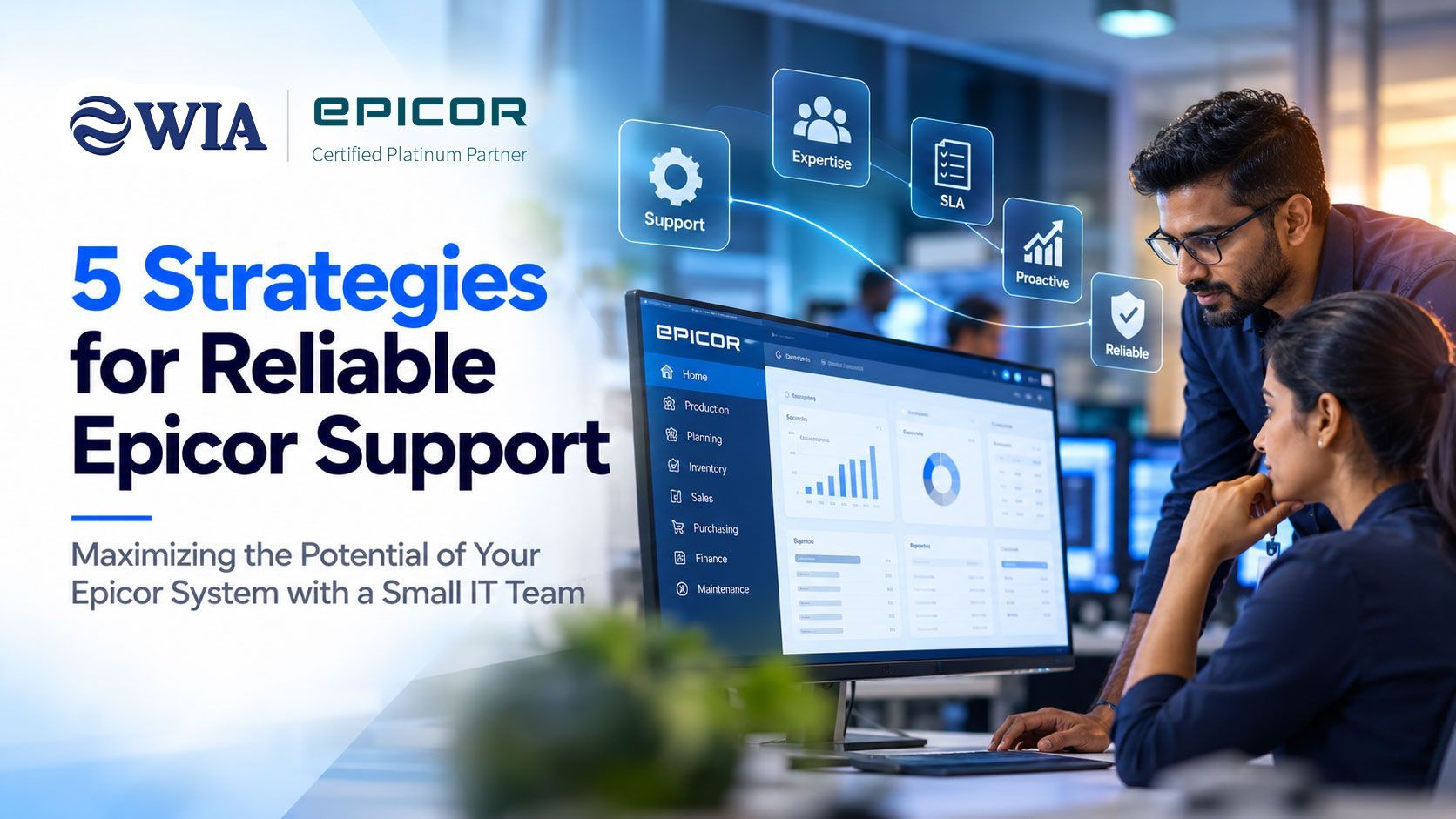
Small IT teams can run Epicor ERP successfully, but only when support is structured, responsive and deep enough to handle both daily incidents and hidden system issues. When support is thin, the result is familiar: slower resolutions, repeat tickets, frustrated users, and more time spent firefighting than improving the business.
Why a Small Epicor Team Gets Stretched Thin
Epicor Kinetic is powerful, but that power creates support demands that can outgrow a small internal team quickly. A team may know the basics of user support, yet still struggle with version-specific issues, integrations, workflows, or production incidents that need experienced escalation and permanent fixes.
The challenge is not just volume. It is also the need for specialized problem solving, consistent SLAs, proactive monitoring, and root cause analysis, which are common expectations in mature ERP support models.
Five Support Gaps That Slow Epicor Teams Down
- Limited expertise depth. Small teams often have broad responsibilities but not enough Epicor-specific depth to diagnose complex issues quickly or confidently.
- SLA gaps. When no formal support tiers exist, response times become inconsistent and critical issues can wait too long for attention.
- Escalating complexity. As integrations, customizations, and user demands grow, the support burden increases faster than headcount usually can.
- No dedicated escalation paths. Without a clear route to senior specialists, problems can cycle through the same team without real resolution.
- Reactive vs. proactive support. If the team only responds after users report issues, the business stays in constant recovery mode instead of preventing incidents early.
Why Issues Keep Returning
Recurring Epicor issues usually do not mean the team is careless. They often point to missing root cause analysis, limited monitoring, and ticket handling that is split across too many tools or people. When incidents are closed as quick fixes instead of permanent corrections, the same failures resurface and consume even more time.
Fragmented ticket management makes this worse because the history of each issue becomes harder to trace. Without connected records, patterns are easy to miss and support decisions are made from symptoms rather than evidence.
Is Your Epicor Support Under Pressure?
Use this checklist to see whether your current support model is under pressure:
- Do Epicor incidents often take longer than expected to resolve?
- Are repeat issues showing up with no documented permanent fix?
- Is there no clear escalation path for complex or urgent problems?
- Do you lack proactive monitoring for system health and early warning signs?
- Are support responsibilities spread across too few people?
- Are users depending on the same small team for both daily help and strategic work?
- Do tickets close without a documented root cause or follow-up action?
If you answered yes to several items, the support gap is likely slowing your ERP performance and increasing risk.
How WIA Supports Small Epicor Teams
WIA Systems Inc., a Certified Epicor Platinum Partner, provides dedicated Epicor support designed for small IT teams. Instead of adding internal headcount, your team gets a structured support model with SLA-backed tiers, experienced escalation paths, proactive monitoring, and root cause analysis. The goal is to move support from reactive firefighting to stable, reliable service.
With that structure in place, your internal team can spend less time on repeat tickets and more time on strategy, process improvement, and growth. Issues that used to cycle through the same people are routed to specialists who can find and correct the underlying cause.
If your organization needs Epicor to run reliably but doesn’t have the capacity for a large in-house support bench, WIA can help close that gap. Contact us to talk through where your support model is under pressure.






Talk to a WIA Epicor Support Expert
Partner with WIA Systems for SLA-backed Epicor support, expert escalation, proactive monitoring, and root cause analysis, so your team can focus on strategy, not tickets.